- Hip arthritis cannot be reversed. But many people can delay a hip replacement for years.
- Exercise has the best evidence. Losing weight, a walking stick and the right pain relief also help.
- A steroid injection eases pain for about two months. The effect does not last.
- Newer treatments, such as PRP and stem cells, are not yet proven for the hip.
- If you do need an operation, it does not have to be a total hip replacement. Hip resurfacing keeps most of your own bone. For younger, active people it is often the best alternative.
Can You Avoid a Hip Replacement?
Sometimes, yes. Many more people can delay one.
Hip arthritis (osteoarthritis) is wear of the smooth cartilage that lines the joint. No treatment can grow that cartilage back.
But arthritis does not always get steadily worse. Many people manage well for years with the right care. Some never need an operation.
Not sure arthritis is the cause? Read about what else can cause hip pain.
The seven options below are in the order most people try them. The first six are not surgery. The seventh is an operation, but one that saves bone.
- Exercise and physiotherapy
- Losing weight
- Walking aids and footwear
- Pain relief medicines
- Steroid injections
- Newer treatments: PRP, stem cells and nerve treatment
- Hip resurfacing
Ask about hip resurfacing first. It replaces only the worn surfaces and keeps your own bone. Jump to option 7, hip resurfacing. Or visit hipresurfacing.uk, Mr Hussain's dedicated hip resurfacing website.
1. Exercise and Physiotherapy
Exercise has the best evidence of any treatment that is not surgery. NICE writes the treatment guidance used by the NHS. It says everyone with osteoarthritis should be offered exercise that is tailored to them.[2]
What the evidence says. A trial in Norway followed 109 people with mild to moderate hip arthritis. All of them were taught about their condition. Half also did a 12-week exercise programme.
Six years later, 22 of the 55 people who exercised had had a hip replacement. Among those who did not exercise, it was 31 of 54. On average, the exercise group kept their own hip about two years longer.[1]
What to do. Strengthen the muscles around your hip and thigh. Add gentle exercise that is easy on the joint, such as walking, cycling or swimming. A physiotherapist can build a plan around your hip. Your GP can refer you.
Who it suits. Almost everyone, at every stage. It helps most when arthritis is mild or moderate.
2. Losing Weight
If you are overweight, losing weight takes load off your hip. NICE says any weight loss is likely to help. It adds that losing a tenth of your body weight is likely to be better than a twentieth.[2]
Weight-loss injections. Medicines such as semaglutide and tirzepatide are now widely used for weight loss. Early research suggests they may also help arthritic hips.
One large study used American health records. It looked at people with obesity and hip arthritis. About 1 in 100 of those on these medicines had a hip replacement within a year. For those not on them, it was about 2 in 100.[3]
This kind of study cannot prove the medicine was the cause. These medicines are prescribed for weight or diabetes, not for arthritis. Speak to your GP if you think they may suit you.
Who it suits. Anyone carrying extra weight. It also makes any later operation safer.
3. Walking Aids and Footwear
A walking stick takes weight off a sore hip. Hold it in the hand opposite your painful hip. NICE says walking aids are worth considering for arthritis in the leg.[2]
The NHS also lists special footwear and insoles as options.[4] Shoes with a cushioned sole soften each step.
Who it suits. People whose pain comes on with walking. A stick is cheap, safe and works straight away.
4. Pain Relief Medicines
The right pain relief can keep you moving. That matters, because staying active protects the hip.
NICE advises:[2]
- Anti-inflammatory gel first. These gels are also called topical NSAIDs. They are offered first for knees and can be tried for other joints.
- Anti-inflammatory tablets next. Examples are ibuprofen and naproxen. Take the lowest dose that works, for the shortest time. You should have a medicine to protect your stomach as well.
- Paracetamol and weak opioids only now and then. NICE no longer suggests them for regular use.
- No strong opioids. The risks outweigh the benefit.
NICE also advises against glucosamine and acupuncture for osteoarthritis. The evidence does not show that they work.
Who it suits. Most people, for flare-ups and to stay active. Check with your GP or pharmacist first. This matters most if you have kidney, heart or stomach problems.
5. Steroid Injections
A steroid injection puts an anti-inflammatory medicine straight into the hip joint. It is guided by ultrasound or X-ray.
What the evidence says. A UK trial tested this in 199 adults with hip arthritis. Everyone had advice and education. Some also had a steroid injection.
Pain was scored from 0 to 10. Two weeks later, the injection group scored about 3 points better. At two months they were about 2 points better. By six months there was no difference.[5]
The limits. The relief is real, but it is short. An injection does not slow the arthritis. Serious problems are rare, but infection can happen.
Timing also matters if surgery may follow. Studies link a steroid injection shortly before a hip operation with a higher risk of infection.
Mr Hussain leaves a gap of six months between an injection and surgery. This applies to hip resurfacing as well as hip replacement. Tell your surgeon if you have had an injection.
Hyaluronic acid injections. These are sold as joint lubricants. NICE says they should not be offered for osteoarthritis.[2]
Who it suits. People who need short-term relief. It can help you through a flare-up, a holiday or a family event. It can also settle pain enough for you to start exercising.
6. Newer Treatments: PRP, Stem Cells and Nerve Treatment
You may have seen newer treatments advertised. Some are promising. None is yet proven for hip arthritis, and none can rebuild worn cartilage.
PRP (platelet-rich plasma). A sample of your own blood is spun to concentrate the platelets. This is then injected into the hip.
Trials in the hip are small. They suggest short-term relief similar to hyaluronic acid. PRP is not part of NICE guidance for osteoarthritis.
Stem cell injections. Cells are taken from your bone marrow or fat and injected into the joint. There are no good-quality trials in the hip yet.
These injections are sold privately and can be costly. Be cautious of any clinic that promises to regrow cartilage.
Nerve treatment (radiofrequency ablation). A needle uses heat to switch off the small nerves that carry pain from the hip. Small studies report that pain is roughly halved for about six months.[6]
There are no large trials yet. It does not treat the arthritis itself. It may suit people who cannot have an operation.
Reshaping operations for younger people. Some younger people have a hip shape problem without much arthritis. Examples are hip impingement and a shallow socket (hip dysplasia). Operations to reshape the hip can help them.
They do not work once arthritis is established.
Who it suits. People who have tried the proven options and understand the evidence is still thin.
7. Hip Resurfacing: The Bone-Saving Alternative to a Total Hip Replacement
The first six options ease symptoms. None of them repairs the joint. If your hip keeps getting worse, an operation may become the right step.
That operation does not have to be a total hip replacement. For the right person, hip resurfacing is the best alternative.
What is hip resurfacing?
Your hip is a ball and socket. In a total hip replacement, the surgeon removes the whole ball. A metal stem is then fixed down the inside of your thigh bone.
Hip resurfacing is different. The ball is kept and reshaped. It is then capped with a smooth cover, much like a crown on a tooth. The socket is lined with a matching shell.
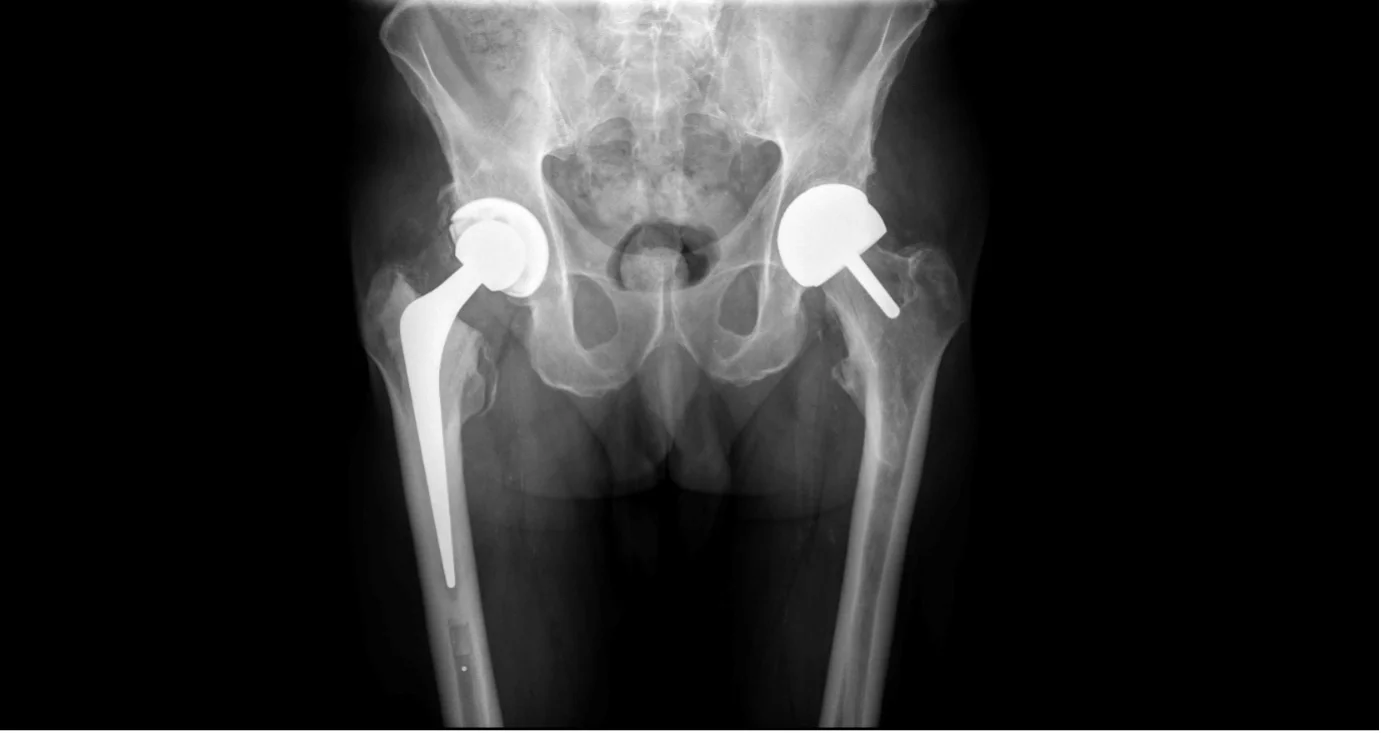
Why it can be better than a total hip replacement
- You keep your own bone. The top of your thigh bone stays in place. If you ever need another operation, there is more bone to work with.
- The hip is more stable. The new ball is close to the size of your own. A bigger ball is much harder to dislocate. This matters most for people at higher risk, as explained in hip resurfacing after spinal fusion.
- You can be more active. Many people return to running and racquet sports. Surgeons usually advise against these after a total hip replacement. Read about returning to sport after hip resurfacing.
- It feels more natural. Many people say the joint feels like their own hip.
Who does hip resurfacing suit?
Resurfacing is not for everyone. It works best if you:
- are younger and active, typically under 65
- have strong, healthy bone
- have osteoarthritis and not a severe deformity
- want to return to sport or physical work
With the older metal implants, results were best in men with larger hips. Women and smaller people had more problems. That is now changing.
Not sure if you qualify? See am I a candidate for hip resurfacing? on Mr Hussain's resurfacing website.
Ceramic resurfacing: now an option for women too
The problems seen with metal implants came from the metal surfaces. Newer implants are made entirely of ceramic.
Two are in use in the UK: ReCerf and H1. Both received their European safety approval (CE mark) in 2025.[9][10]
What the evidence says. A 2025 study followed 604 ceramic resurfacings in five countries. Of these, 268 were in women.
Five years on, about 98 in 100 were still in place. Women did just as well as men. Smaller hips did just as well as larger ones.[7] There is a full guide to hip resurfacing for women on the resurfacing website.
These are early results. Most of the hips in that study have not yet reached five years. Metal resurfacing has results going back 25 years. Ceramic does not yet.
You can read more about ceramic hip resurfacing with ReCerf.
An honest word on the evidence
National figures show metal resurfacings have been redone more often than total hip replacements. This was most marked in women.[8] It is why resurfacing went out of favour for a time.
The best results come from two things: choosing the right patient, and a surgeon who does the operation often. In one long-term study of men, about 9 in 10 metal resurfacings were still working at 25 years.
Mr Hussain is one of the highest-volume hip resurfacing surgeons in the UK. You can see Mr Hussain's published results. You can also learn how to read a surgeon's NJR results.
Mr Shakir Hussain trained under Mr Ronan Treacy at the Royal Orthopaedic Hospital in Birmingham. Mr Treacy co-developed the Birmingham Hip Resurfacing. Mr Hussain performs both resurfacing and total hip replacement, so his advice is not tied to one operation.
"The choice between resurfacing and replacement is important. The choice of surgeon is at least as important. You want someone who does this often, and who knows when not to recommend it."
Mr Shakir Hussain, Consultant Orthopaedic SurgeonWhen a total hip replacement is the better choice
A total hip replacement is one of the most successful operations in medicine. It is the better choice if you have weak bone or a badly misshapen hip. It also suits most people over 70.
You can read more about hip replacement surgery with Mr Hussain.
- Visit hipresurfacing.uk, Mr Hussain's dedicated hip resurfacing website for the full guide.
- Read about hip resurfacing in Birmingham, including costs and recovery.
The Seven Options Compared
| Option | What it does | How long it helps | Best for |
|---|---|---|---|
| Exercise and physiotherapy | Strengthens the hip, eases pain | As long as you keep it up | Almost everyone |
| Losing weight | Takes load off the hip | As long as the weight stays off | Anyone carrying extra weight |
| Walking aids and footwear | Takes weight off the hip | While you use them | Pain when walking |
| Pain relief medicines | Eases pain so you can stay active | Hours per dose | Flare-ups and daily activity |
| Steroid injection | Calms the joint | About two months | Short-term relief |
| PRP, stem cells, nerve treatment | Aims to ease pain | Uncertain, months at best | Those who accept thin evidence |
| Hip resurfacing | Replaces the worn surfaces, keeps your bone | Many years | Younger, active people with strong bone |
When Waiting Stops Helping
Putting off an operation is not always the safe choice. It may be time to see a hip surgeon if:
- pain wakes you at night
- you can walk less far each month
- pain relief no longer works
- you are giving up things you enjoy
NICE says you should be referred for joint replacement when two things are true. Your symptoms are badly affecting your quality of life. And treatment without surgery has not worked.[2]
Waiting too long has a cost. Muscles weaken when a hip is painful and stiff. Research suggests that people who wait until they can barely function recover less well after surgery.
There is a second reason for resurfacing. It needs strong bone in the ball of your hip. If arthritis is left to damage that bone, resurfacing may no longer be possible.
How Mr Hussain Can Help
A consultation does not commit you to surgery. Mr Hussain will examine your hip and look at your X-rays. He will then tell you plainly where you stand. Sometimes the right advice is to carry on without an operation.
If surgery is the right step, he will explain whether resurfacing or a total hip replacement suits you better. You can read about Mr Hussain's work as a hip surgeon in Birmingham. You can also see the fees for hip resurfacing and hip replacement.
If you decide to go ahead, these guides explain what comes next:
Frequently Asked Questions
What is the best alternative to a hip replacement?
It depends on how advanced your arthritis is. For mild or moderate arthritis, exercise has the best evidence. If you need an operation, hip resurfacing is the main alternative to a total hip replacement. It suits younger, active people with strong bone.
Can I avoid a hip replacement altogether?
Some people can. Arthritis does not always get worse, and many people manage for years with exercise, weight loss and pain relief. No treatment can regrow worn cartilage. If pain and stiffness keep increasing, an operation is likely to give you the best result.
How long does a steroid injection in the hip last?
About two months for most people. In a UK trial, pain was clearly better at two weeks and at two months. By six months there was no difference. An injection does not slow the arthritis.
Is hip resurfacing better than a hip replacement?
For the right person, yes. Resurfacing keeps your own bone, is harder to dislocate and allows more activity. It suits younger, active people with strong bone. For older people, or those with weak bone, a total hip replacement is the better choice.
How do I know if I am suitable for hip resurfacing?
A hip surgeon who performs resurfacing can tell you. They will look at your age, your activity, your bone strength and your X-rays. Ceramic implants mean more women and smaller people are now suitable.
Can women have hip resurfacing?
Yes. Older metal implants worked less well in women. Newer ceramic implants have changed this. In a 2025 study of 604 ceramic resurfacings, women did just as well as men at five years.
Do stem cell or PRP injections work for hip arthritis?
They are not yet proven. Trials of PRP in the hip are small and show short-term relief at best. There are no good-quality trials of stem cells in the hip. Neither can regrow cartilage.
References
- Svege I, Nordsletten L, Fernandes L, Risberg MA. Exercise therapy may postpone total hip replacement surgery in patients with hip osteoarthritis: a long-term follow-up of a randomised trial. Ann Rheum Dis. 2015;74(1):164-169. Full text
- National Institute for Health and Care Excellence. Osteoarthritis in over 16s: diagnosis and management. NICE guideline NG226. 2022.
- Porto JR, Lavu MS, Hecht CJ, et al. The impact of contemporary glucagon-like peptide-1 receptor agonists on the onset, severity, and conversion to arthroplasty in hip and knee osteoarthritis. Orthop J Sports Med. 2025. Full text
- NHS. Alternatives to a hip replacement.
- Paskins Z, et al. Clinical effectiveness of one ultrasound guided intra-articular corticosteroid and local anaesthetic injection in addition to advice and education for hip osteoarthritis (HIT trial): single blind, parallel group, three arm, randomised controlled trial. BMJ. 2022;377:e068446. Full text
- Radiofrequency ablation of the hip: review. Ann Palliat Med. Full text
- Koh CK, Walter WL, Yates P, Manktelow A, De Smet K, Holland J, Beaulé PE. Influence of head size and sex on the five-year survival of ceramic-on-ceramic hip resurfacing: an international multicentre study. Bone Joint J. 2025;107-B(7):691-697. Full text
- National Joint Registry (NJR). 22nd Annual Report 2025: outcomes after hip replacement.
- Imperial College London. New implant enabling women to access hip resurfacing surgery awarded CE mark. July 2025.
- Medical Device Network. MatOrtho's ReCerf hip resurfacing arthroplasty obtains CE mark. July 2025.
This page is for general information and is not a substitute for a consultation. Which treatment suits your hip is assessed individually.

Mr Shakir Hussain
Consultant Hip and Knee Surgeon at the Royal Orthopaedic Hospital Birmingham, with over 5,000 procedures. He performs both hip resurfacing and total hip replacement.