Ankylosing Spondylitis and the Hip
Ankylosing spondylitis is a chronic inflammatory disease that primarily affects the spine and the sacroiliac joints, but the hip is the most commonly affected peripheral joint. Between 24 and 36 per cent of patients develop hip involvement (coxitis), usually bilaterally, with progressive cartilage destruction and sometimes bony fusion. Mr Shakir Hussain, Consultant Orthopaedic Surgeon at the Royal Orthopaedic Hospital Birmingham, performs total hip replacement for hip damage from ankylosing spondylitis, working closely with rheumatologists to optimise the perioperative plan.
Medically reviewed by Mr Shakir Hussain, MBBS MRCS FRCSEd (Tr & Orth), Consultant Orthopaedic Surgeon · Last reviewed: June 2026 · Next review due: June 2029
Ankylosing spondylitis (AS) is a chronic inflammatory disease of the spine and sacroiliac joints, and the hip is its most commonly affected peripheral joint: between a quarter and a third of patients develop hip involvement, usually on both sides. Biologic medication and physiotherapy control the disease, but established hip damage does not reverse, and a stiff or fused hip alongside a rigid spine is severely disabling. Mr Shakir Hussain performs total hip replacement for ankylosing spondylitis in Birmingham at the Royal Orthopaedic Hospital, planning implant position around the altered spinal mechanics.
Also known as: axial spondyloarthritis with hip involvement, AS coxitis. Spinal stiffness changes hip mechanics; the same planning issues are described in hip surgery after spinal fusion.
What is ankylosing spondylitis?
Ankylosing spondylitis (AS) is a chronic immune-mediated inflammatory disease that primarily attacks the sacroiliac joints and spine. Modern terminology groups it under "axial spondyloarthritis". Over years it can cause fusion of the spine (the classic "bamboo spine"), and in 24 to 36 per cent of patients it spreads to the hips, where progressive cartilage destruction can lead to bony ankylosis (fusion).
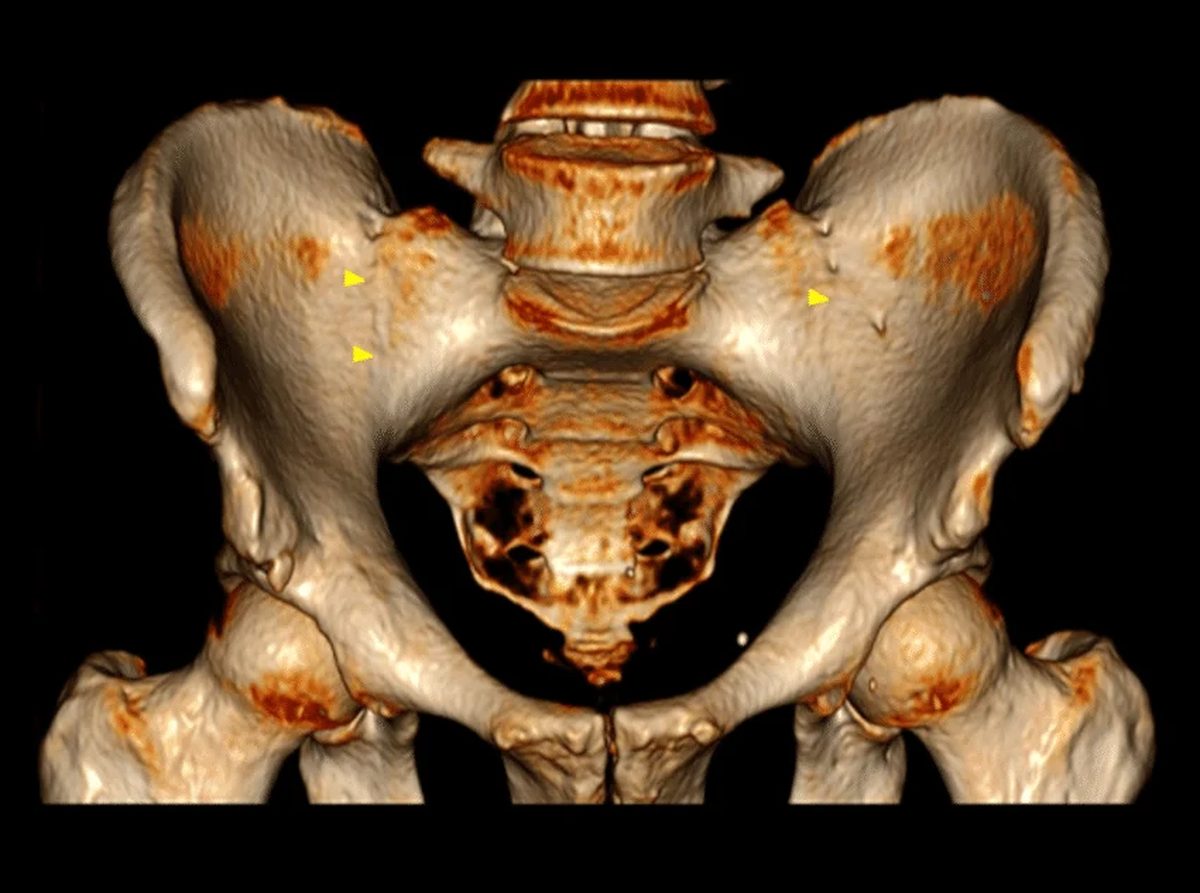
The hallmark of ankylosing spondylitis is inflammation at the entheses (where ligaments and tendons attach to bone), particularly in the sacroiliac joints at the back of the pelvis. The body responds to chronic inflammation by laying down extra bone (ossification), gradually fusing the joints together. In the spine this produces the characteristic "bamboo" appearance. In the hips, it produces progressive joint space loss, sometimes followed by fusion.
The hip is the single most commonly affected peripheral joint in AS. Hip involvement (sometimes called coxitis) is also the strongest predictor of long-term functional disability. Around 5 per cent of AS patients eventually need hip replacement, with the figure higher in juvenile-onset disease.
AS is distinct from rheumatoid arthritis and from osteoarthritis. It is one of a family of inflammatory diseases (the spondyloarthritides) that share the HLA-B27 genetic marker, including reactive arthritis, psoriatic arthritis, and inflammatory bowel disease-associated arthritis.
What does ankylosing spondylitis hip disease feel like?
Ankylosing spondylitis hip involvement causes insidious bilateral groin or buttock pain, with prolonged morning stiffness lasting over 30 minutes that eases with movement and worsens with rest. Symptoms typically appear in patients already known to have AS. Most patients have axial features (back pain, sacroiliitis) alongside the hip symptoms, and a substantial minority have associated uveitis, psoriasis, or inflammatory bowel disease.
The pattern of hip pain in AS differs from osteoarthritis. It is inflammatory rather than mechanical: better with movement, worse with rest. This is a key clinical clue Mr Hussain looks for when assessing hip pain in younger adults.
Bilateral groin and buttock pain
Symptoms tend to affect both hips together and are accompanied by sacroiliac/buttock pain that often alternates between sides. This bilateral, multi-area pattern is a strong pointer to inflammatory rather than mechanical disease.
Inflammatory stiffness
Morning stiffness lasting over 30 minutes (often one to two hours in active disease). The stiffness eases with gentle movement and returns with rest, the opposite pattern to mechanical osteoarthritis.
Progressive loss of motion
The hip slowly loses its full arc of movement. Patients describe difficulty putting on socks and shoes, getting into a car, or sitting cross-legged. Eventual flexion and adduction contracture is common.
Spinal stiffness and back pain
Inflammatory low back pain, particularly at night and in the early morning, often started years before the hip symptoms. Mid-back and neck stiffness develops over years as the spine ossifies.
Systemic features
Fatigue, low-grade fever, and a general unwell feeling during flares. Many patients describe a profound tiredness that exercise does not fix.
Eye, skin, and bowel involvement
Acute anterior uveitis affects 25 to 40 per cent of AS patients across a lifetime. Psoriasis and inflammatory bowel disease are also more common. Tell Mr Hussain about any of these because they affect the medication plan around surgery.
What causes ankylosing spondylitis?
Ankylosing spondylitis has a strong genetic component. The HLA-B27 gene is present in 90 to 95 per cent of patients (compared to around 8 per cent of the general UK population). Disease typically starts in the late teens to early 30s and is two to three times more common in men, although modern recognition of female AS is narrowing this ratio. Family history is important, including family history of uveitis, psoriasis, and inflammatory bowel disease.
The exact triggers of AS remain incompletely understood, but the genetic basis is strong and the inflammatory pathways (TNF, IL-17, IL-23) are well characterised. The IL-23/IL-17 pathway is now the basis of several modern medications.
The most important risk factors are:
- HLA-B27 positivity. The strongest genetic association in rheumatology. Approximately 90 to 95 per cent of Northern European AS patients carry this gene variant, although only a small minority of HLA-B27 carriers ever develop AS.
- Male sex. Historically two to three times more common in men, although contemporary recognition of female AS (often presenting with less spinal damage and more peripheral disease) is changing this picture.
- Age 20 to early 30s at onset. Around 80 per cent of patients are symptomatic by age 30, and onset over the age of 45 is uncommon (under 5 per cent).
- Family history of ankylosing spondylitis. First-degree relatives have a substantially higher risk than the general population.
- Family history of related conditions. Uveitis, psoriasis, and inflammatory bowel disease in the family increases AS risk through shared genetic susceptibility.
- Gut microbiome. Emerging evidence implicates intestinal dysbiosis and the gut-joint axis in triggering disease in genetically susceptible individuals. This is a 2024-2026 area of active research.
How is ankylosing spondylitis hip involvement diagnosed?
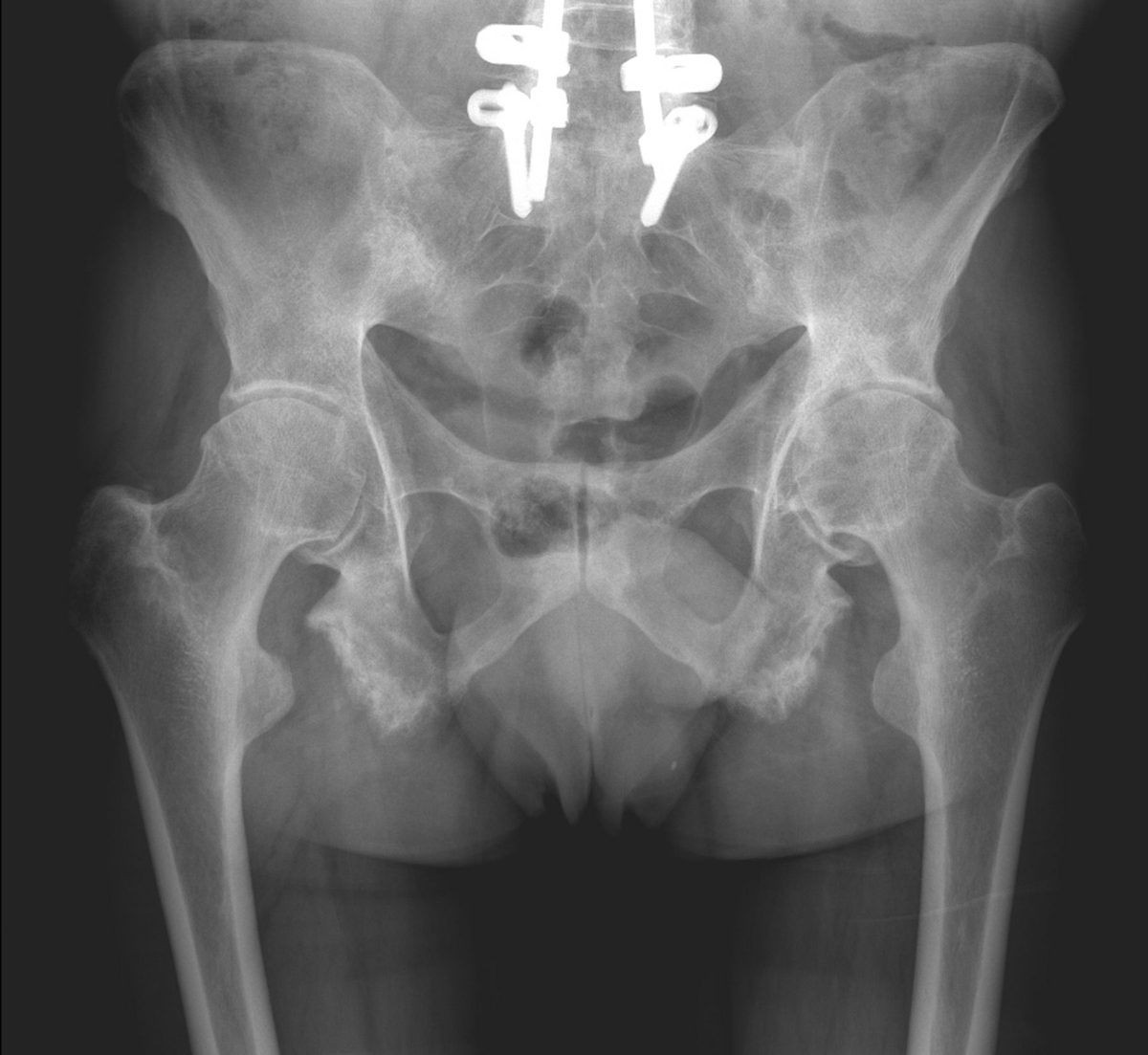
Ankylosing spondylitis is diagnosed by a rheumatologist using the ASAS classification criteria, which combine inflammatory back pain, imaging of the sacroiliac joints, HLA-B27 testing, and other features. MRI of the sacroiliac joints shows active inflammation (bone marrow oedema) early. Plain X-rays of the pelvis show structural changes later, including the bilateral sacroiliitis grading defined by the modified New York criteria and the eventual hip involvement.
Most patients are already diagnosed with ankylosing spondylitis by the time hip symptoms develop. The orthopaedic surgeon's role is then to assess the hip damage and plan surgery, rather than diagnose the underlying disease. NICE NG65 recommends referral for adults under 45 with more than three months of back pain that meets inflammatory features.
Investigations used in ankylosing spondylitis hip:
- HLA-B27 typing. A blood test that is positive in 90 to 95 per cent of AS patients. Not diagnostic on its own (most HLA-B27 carriers never develop AS), but combined with clinical features and imaging it strongly supports the diagnosis.
- Inflammatory markers (CRP and ESR). Useful when raised, but normal markers do not rule out AS (a significant proportion of patients have normal inflammatory markers even in active disease).
- MRI of the sacroiliac joints. The most sensitive test for early disease, showing active sacroiliitis as bone marrow oedema on STIR sequences. Used to diagnose non-radiographic axial spondyloarthritis before X-ray changes appear.
- AP pelvic X-ray. Shows structural changes in the sacroiliac joints (graded 0 to 4 using the modified New York criteria), syndesmophytes, and the joint space loss, protrusio acetabuli, and trochanteric "whiskering" of hip involvement. In advanced cases the hip can be completely fused.
- Spinal X-rays. Show syndesmophytes and the classic "bamboo spine" appearance in long-standing disease.
- Cervical spine X-ray. Particularly important before surgery. Cervical ankylosis affects intubation planning and is checked as part of the pre-operative anaesthetic assessment.
How is ankylosing spondylitis treated medically?
Ankylosing spondylitis is managed by rheumatologists using a stepwise approach. NSAIDs are the first-line drug and remain effective for most patients. Physiotherapy is a cornerstone. If symptoms persist, biologic DMARDs are added: anti-TNF agents (adalimumab, etanercept, infliximab, golimumab, certolizumab), IL-17 inhibitors (secukinumab, ixekizumab, bimekizumab), and JAK inhibitors (tofacitinib, upadacitinib). The 2025 BSR axial spondyloarthritis guideline is the current UK standard.
Modern medical therapy has transformed the outlook for AS. Early aggressive treatment can substantially slow disease progression. Mr Hussain works closely with rheumatologists to time any surgery so medical therapy is optimised before and after.
The medical management framework is:
- NSAIDs. First-line drug, taken continuously or on-demand. Effective in most patients with mild to moderate disease.
- Physiotherapy. The cornerstone of non-drug treatment. Daily spine and hip mobility exercises preserve range of motion and prevent contractures.
- Anti-TNF biologics. Adalimumab, etanercept, infliximab, golimumab, and certolizumab. Particularly preferred when uveitis or inflammatory bowel disease co-exists.
- IL-17 inhibitors. Secukinumab, ixekizumab, and the newer bimekizumab (3-year EULAR 2025 data showing sustained response). Favoured when significant psoriasis co-exists; avoided in active inflammatory bowel disease.
- JAK inhibitors. Tofacitinib and upadacitinib. Positioned after biologics following 2025 EULAR repositioning over cardiovascular and malignancy concerns.
- Lifestyle measures. Stopping smoking (smoking accelerates spinal fusion and reduces medication efficacy), maintaining a healthy weight, and structured daily exercise.
Medical therapy controls inflammation and slows progression but cannot reverse cartilage damage already in the hip. When the hip has been substantially destroyed by long-standing disease, total hip replacement is the right next step.
If you are taking biologic medication, please review Mr Hussain's patient guide on medications to pause before hip or knee surgery. The perioperative plan is agreed jointly with your rheumatologist following the 2022 ACR/AAHKS guideline.
When should I consider hip replacement for ankylosing spondylitis?
Hip replacement is indicated when hip pain and functional limitation persist despite optimal medical therapy and physiotherapy. Operating before the hip fully fuses (bony ankylosis) is preferable because pre-existing fusion increases technical difficulty, raises heterotopic ossification risk, and reduces the functional gain from surgery.
Hip surgery decisions in AS are made jointly between you, your rheumatologist, and Mr Hussain. The timing is important: too early and medical therapy may still be able to control symptoms; too late and the hip is fused and harder to reconstruct. NICE guidance supports referral when symptoms substantially affect quality of life despite optimised medical management.
Markers Mr Hussain looks for at consultation:
- Persistent groin pain despite optimised NSAID and biologic therapy
- Walking distance reduced and worsening night pain
- Progressive loss of hip range of motion, particularly fixed flexion contracture affecting standing posture
- Bilateral hip disease typical of AS, with both hips often needing replacement (sometimes staged 6 to 12 weeks apart)
- X-ray showing significant joint space loss, protrusio acetabuli, or early ankylosis
- Difficulty with self-care, work, or activities of daily living
Mr Hussain coordinates with your rheumatologist to time biologic medications around surgery (typically held for one dosing interval pre-op and restarted at around 14 days post-op once the wound is healed). Cervical spine assessment is done before any operation that may require general anaesthesia, because cervical ankylosis changes the intubation plan.
Private consultations with Mr Hussain are available at the Royal Orthopaedic Hospital, Priory Hospital Edgbaston, and Harborne Hospital. See the private consultation and surgery fees page for pricing and recognised insurers, or book a consultation directly.
What surgical options are available for ankylosing spondylitis hip?
Total hip replacement is the standard surgical treatment for ankylosing spondylitis hip involvement. Hip resurfacing is generally not recommended because of the chronic inflammation, multi-joint disease, inflammatory osteopenia of the femoral neck, and the higher risk of heterotopic ossification typical of AS. Most patients have both hips replaced, often staged 6 to 12 weeks apart.
Mr Hussain trained in both hip replacement and hip resurfacing but recommends total hip replacement in nearly all AS patients because the disease characteristics make resurfacing higher risk. A stiff or fused hip alongside a rigid spine is exactly the situation Mr Hussain's complex hip replacement planning is designed for.
Total Hip Replacement
The damaged femoral head and acetabulum are both replaced. Uncemented fixation is usually favoured. Heterotopic ossification prophylaxis (perioperative NSAIDs or single-dose radiotherapy) is used to reduce the risk of extra bone forming around the new joint after surgery. Cervical spine ankylosis is assessed pre-operatively because it affects intubation planning.
- Standard treatment for ankylosing spondylitis hip involvement
- Often staged bilateral procedure
- Heterotopic ossification prophylaxis built into the plan
- Cervical spine and anaesthetic risk assessed pre-operatively
- Biologic medications timed around surgery in coordination with rheumatology
Hip Resurfacing
Hip resurfacing is not recommended in ankylosing spondylitis. Chronic synovial inflammation, inflammatory osteopenia of the femoral neck, multi-joint disease, and higher heterotopic ossification risk all combine to make resurfacing higher risk than total hip replacement in this group.
- Generally contraindicated in ankylosing spondylitis
- Inflammatory osteopenia weakens the femoral neck
- Higher risk of fracture and aseptic loosening
- Total hip replacement is the safer, more durable choice
For how hip resurfacing compares with a total hip replacement, and the options to try before either, read Mr Hussain's guide to the alternatives to a total hip replacement. Most AS patients should expect Mr Hussain to recommend total hip replacement.
How successful is hip replacement for ankylosing spondylitis?
Total hip replacement gives substantial pain relief and motion restoration in ankylosing spondylitis patients, with Harris Hip Scores typically improving from around 51 pre-operatively to around 76 after surgery. The dominant complication is heterotopic ossification (extra bone formation around the joint). With perioperative prophylaxis the rate of clinically significant heterotopic ossification is around 10 per cent.
Hip replacement outcomes in AS continue to improve with modern bearings, better prophylaxis against heterotopic ossification, and refined perioperative protocols. Long-term survivorship is good despite the technical demands.
Expertise in ankylosing spondylitis hip treatment in Birmingham
Consultant at the Royal Orthopaedic Hospital
Mr Hussain is a Consultant Orthopaedic Surgeon practising at the Royal Orthopaedic Hospital Birmingham, one of the largest specialist orthopaedic hospitals in Europe, alongside Priory Hospital Edgbaston and Harborne Hospital.
3,000+ arthroplasty cases
From a total of more than 5,000 procedures performed, giving the operative volume and case complexity required for consistently excellent outcomes. Read more about Mr Hussain's training and background.
British Hip Society Travelling Fellowship
Trained at ENDO-Klinik Hamburg under Professor Thorsten Gehrke and Professor Mustafa Citak, the international reference centre for complex hip surgery.
Both hip replacement and hip resurfacing
Many surgeons offer only one technique. Mr Hussain trained in both, allowing the choice to be tailored to the individual patient rather than to a single technique.
Doctify Outstanding Patient Experience 2024, 2025, and 2026
Awarded in three consecutive years, recognising consistently high patient-reported outcomes and communication.
4.98 out of 5 from verified reviews on Doctify. Outstanding Patient Experience Award 2024, 2025, and 2026.
At a glance
- Ankylosing spondylitis primarily affects the spine, but the hip is its most common peripheral target, usually on both sides.
- Hip involvement in AS tends to start young, and progressive stiffness can end in bony fusion of the joint.
- Biologics and structured physiotherapy control inflammation but cannot reverse established cartilage destruction or fusion.
- A stiff hip combined with a rigid spine is doubly disabling, which is why hip replacement in AS often transforms mobility.
- The fused spine changes pelvic mechanics, so implant positioning is planned around spinopelvic alignment to reduce dislocation risk.
- All-inclusive hip replacement packages start from £13,050, and all major private medical insurers are accepted.
Frequently asked questions about ankylosing spondylitis and the hip
For more questions about surgery, recovery, fees, and what to expect, see the full frequently asked questions page or read recent patient testimonials.
References and further reading
- NHS. Ankylosing spondylitis. nhs.uk/conditions/ankylosing-spondylitis
- National Axial Spondyloarthritis Society (NASS). nass.co.uk
- National Joint Registry (NJR). Annual reports and implant performance data. njrcentre.org.uk
- Evans JT, Evans JP, Walker RW, Blom AW, Whitehouse MR, Sayers A. How long does a hip replacement last? The Lancet, 2019. thelancet.com
Medically reviewed by Mr Shakir Hussain, Consultant Orthopaedic Surgeon. Last reviewed: June 2026. Next review due: June 2029.